This is one of the most common questions I get from new livestock guardian dog owners:
“Should we get a male or a female Anatolian Shepherd?”
It’s a reasonable question. Most people assume there must be a clear advantage to one or the other. The honest answer? Sex matters far less than breeding, upbringing, and management.
But some real differences can affect your day-to-day life with an Anatolian Shepherd Dog—especially if you’re new to livestock guardian dogs or running a mixed livestock homestead with children and other animals.
Let’s break it down to make it make sense.
First: What Most Families Actually Need in a Guardian Dog
Most of the people I work with fall into the same few categories:
- First- or second-time livestock guardian dog owners
- Rural or semi-rural homes
- Mixed livestock species (cattle, goats, sheep, poultry, etc.)
- Purpose includes children, pets, or farm visitors
- Limited LGD experience but willingness to learn and manage the dog correctly
In other words, they don’t just want a big dog. They want a reliable guardian and a safe, stable member of the family ecosystem. Achieving that outcome has far more to do with how the dog is raised and managed than whether it’s male or female.
The Biggest Difference Between Male and Female Anatolians

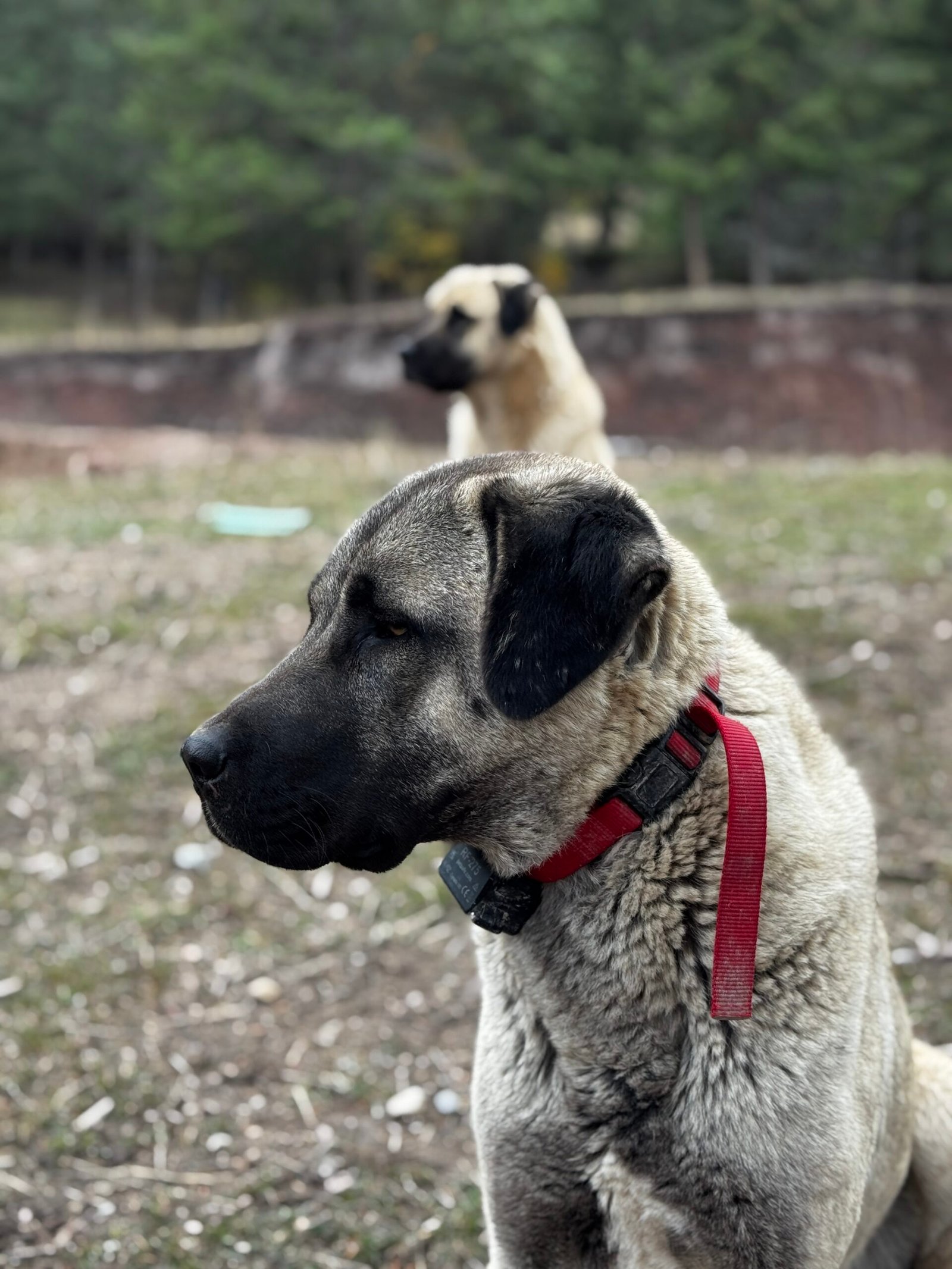
The most consistent difference between males and females is physical size. On average, Male Anatolian Shepherds are 30–50% larger than females. That’s not a small difference. In the photo above, you see Ares, our 5 year old male weighing 140 lb and his daughter Tessa, 2 year old female weighing 102 lb. Sam, 12, in the middle wouldn’t be able to walk either dog safely on a leash if they weren’t trained and respectful, even if he outweighs Tessa.
When I explain this to families, I tell them:
“You’re getting about 30–50% more dog with a male.”
That extra size can be an advantage when dealing with large predators.
But it also means:
- More strength
- More physical power
- More responsibility for the owner
If a 130–150 pound dog decides to test a boundary, your management and fencing need to be solid. Most people are not physically stronger than a dog of this size- so we need to be on our A-game mentally and prevent potential issues.
All Anatolian Shepherd Dogs should be trained to walk on a loose leash, load/ride in a vehicle, stand for exam (even a stranger like your Vet), and have an “Off-switch” when they are off your property. This is even more important with a larger dog.
Sex-Based Personality Differences Are Often Overstated
People often assume males and females behave very differently. In reality, individual personality matters far more than sex. Some females are bold and dominant. Some males are calm and thoughtful. Anatolians are independent thinkers by nature, and each dog develops its own working style.
What is consistent across both sexes is that:
- They will test boundaries.
- They require good fencing.
- They require consistent leadership.
If those pieces aren’t in place, problems happen regardless of sex.
Hormones and Management: The Real Consideration
Where sex does make a noticeable difference is in reproductive behavior and management requirements.
Intact Females
An intact female will come into heat roughly twice a year.
When that happens:
- She will attract male dogs from miles away
- This can include neighbor dogs, strays, coyotes, and even wolves
Yes, crossbreeding can happen! Managing an intact female in heat requires strict lockdown to prevent unwanted litters.
In practical terms, this can mean:
- Up to two months of limited working ability per year
- Additional labor and supervision
Intact Males
Intact males bring a different challenge. A male dog can detect a female in heat from several miles away (sometimes up to five miles upwind).
When that happens:
- His drive to breed may override his guarding instincts.
- Roaming behavior becomes much more likely.
For a working livestock guardian dog, that distraction can become a serious liability.
Why Most Working LGDs Are Eventually Altered
For these reasons, many working livestock guardian dogs are spayed or neutered once their growth plates have closed.
This allows the dog to:
- Stay focused on its job
- Avoid roaming or breeding distractions
- Work consistently year-round
Spaying or neutering does not reduce a guardian dog’s working ability. If anything, it often improves reliability. However, early altering can affect skeletal development, so timing should always be discussed with your veterinarian.
Maturity: Do Females Mature Sooner?
Another common myth is that females mature quicker than males or that either sex matures on a predictable timeline. Reality is a little messier. There is no magical age when a puppy suddenly switches from teenager to responsible adult.
Both males and females can live full-time with livestock before 24 months if they are:
- Properly supervised
- Prevented from developing bad habits
- Consistently guided during adolescence
That said, females often mature slightly earlier than males, though this is not a rule. Remember: Every dog is an individual.
The Most Important Factor in Puppy Sex Selection: Your Existing Dogs
If you already have a dog working on your property, this becomes an important factor in choosing the sex of your new puppy.
Livestock guardian breeds are prone to same-sex aggression (SSA). This means two dogs that once worked together peacefully may suddenly reach maturity and no longer tolerate each other. When that happens, it can require permanent separation. And that’s not always easy to manage on a working farm.
There’s a common saying in the dog world: “Males fight to breed. Females fight to breathe.”
In other words:
- Male conflicts are often triggered by reproductive competition.
- Female conflicts may not require a specific trigger at all.
Think high school dynamics:
Sometimes the reason for female conflict is simply, “I just don’t like your face.” And those grudges can last forever. Whereas male conflict tends to have a clear trigger, a physical confrontation, and it’s over. The dogs are similar. Once two females establish a pattern of conflict, 100% separation may be the only way to prevent future injuries.
Of course, ALL inter-pack conflict is bad. It is distraction from their intended purpose and work. Injuries range from superficial to serious, and impromptu vet visits post dog-fight aren’t cheap. Matching your new addition to fit your existing pack is KEY to your success.
The Safest Pairing Strategy
Because of this, the easiest path for most farms is simple: Pair opposite sexes.
If you already have:
- A male LGD → add a female
- A female LGD → add a male
Male/female partnerships generally have much lower conflict rates than same-sex pairs.
The Three Things I Tell Every New LGD Owner
If you remember nothing else from this article, remember these three points:
1. Sex matters less than breeding, upbringing, and management.
A well-bred, well-raised Anatolian will outperform a poorly managed dog every time. While males are typically larger in stature, they are not “better” or “worse” than females in any respect. Your personal preferences for a particular sex of dog is worth noting, but it is not the primary selection criterion for an LGD placement.
2. Choose the sex that fits your existing dog situation.
If you already have a guardian dog, opposite sex pairings are usually the easiest path forward.
If you don’t have an LGD, but you have a dominant pet dog who will interact with this new LGD, select an opposite-sex pup.
If this pup is starting as an only-dog, or never going to have direct contact with pet dogs, sex is immaterial to the quality of work they can do for you!
3. Most livestock guardian dog problems are human management problems.
These dogs are intelligent, independent working animals.
If you give them:
- clear boundaries
- good fencing
- proper training
- consistent leadership
They will usually rise to the job you give them. If you don’t give your Anatolian Shepherd Dog a clear purpose, the dog will give themselves jobs! They just may not be the ones you wanted.
Closing Thoughts
Choosing between a male or female Anatolian Shepherd isn’t about finding the “better” dog. It’s about choosing the dog that fits your management style, your livestock setup, and your existing animals.
When proper breeding, consistent upbringing, and responsible management are in place, both males and females can become exceptional livestock guardian dogs and family protectors. That is our joint goal as your pup’s support system!